Find what worksheets help speaking fluency, from...
Learn moreA beginner class can go off track quickly when the material is either too thin to sustain a lesson or too dense for learners to follow. That is why choosing the right English teaching materials for beginners PDF matters so much. Teachers do not just need printable pages. They need resources that are clear, level-appropriate and ready to use without adding another hour of preparation.
For beginner learners, small design choices make a big difference. A worksheet with crowded instructions, unclear visuals or too many new words can slow the whole lesson. On the other hand, a well-structured printable resource gives the class a clear route from recognising language to using it with confidence. If you teach A1 learners, adult starters, young beginners or mixed-attainment groups, the quality of the PDF in front of you often shapes the pace and success of the lesson.
Beginner materials work best when they reduce cognitive load. Learners at this stage are still getting used to classroom English, basic task types and the rhythm of language learning itself. They should not have to decode the layout before they can start the task.
A strong beginner PDF usually introduces one clear target at a time. That might be greetings, numbers, classroom objects, days of the week or simple present forms. The focus stays narrow enough for learners to succeed, but not so narrow that the worksheet becomes repetitive or disconnected from real use.
Visual support is equally important. Pictures, matching tasks, gap fills with prompts and controlled speaking activities all help learners move from recognition to production. At beginner level, clean formatting is not a cosmetic extra. It is part of the teaching.
Answer keys also matter more than many teachers admit. In busy school settings, tutoring sessions or cover lessons, ready-made answers save time and help maintain consistency. They are especially useful when resources are shared across a department or used by less experienced teachers.
Plenty of teaching is now digital, but PDF resources remain practical because they fit the way many lessons are actually delivered. Teachers need materials they can download quickly, print clearly and use in different settings without reformatting.
A printable PDF is reliable. It keeps the layout intact, works well for in-person teaching and can often be shared for homework or remote support. For private tutors, it is easy to print one copy and annotate it live. For schools, it gives staff a consistent version that can be filed, photocopied and reused.
There is a trade-off, of course. A PDF is not interactive in the way a digital platform might be. It will not mark answers automatically or adapt to student performance. But for many teachers, that is not a drawback. It means more control over pacing, presentation and classroom interaction.
The quickest resource is not always the most useful one. A random free worksheet may look convenient, but if it needs rewriting, extra examples or a new task order, it stops being a time-saver.
When reviewing English teaching materials for beginners PDF, start with level fit. Beginners need familiar vocabulary, short instructions and limited grammar load. If a worksheet mixes too many objectives, you will spend lesson time clarifying rather than teaching.
Next, check task progression. The best beginner resources tend to move in a simple sequence. Learners notice language first, then practise it in a controlled way, then use it in a short personalised task. That structure reduces hesitation and supports classroom flow.
It is also worth checking whether the material is genuinely printable. Some PDFs look good on screen but lose clarity when printed in black and white. Others use tiny fonts or complex page designs that are harder for beginners to process. If you teach regularly from printed packs, readability should be a core criterion.
Finally, think about adaptability. A solid beginner worksheet should work for one-to-one lessons, small groups or full classes with only minor changes. Resources with clear task boundaries and reusable formats are often the most dependable.
Not every lesson needs a full workbook-style pack. In many cases, a smaller, focused resource is more effective.
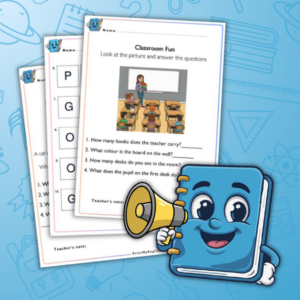
Worksheets remain the core option because they provide guided practice and visible lesson outcomes. They are useful for vocabulary sets, basic grammar, reading for gist, sentence building and simple writing.
Flashcards support fast presentation and repetition. For beginners, they are particularly effective for concrete nouns, daily routines, jobs, food and classroom language. They also help with pair work and quick revision.
Simple games and classroom activities can be just as valuable as formal worksheets. A well-designed speaking card activity or matching exercise often creates more memorable practice than another page of gap fills. The key is control. At beginner level, games work best when they still keep the language target visible.
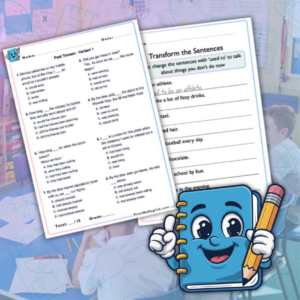
Tests and review sheets have their place too. They help teachers check retention and give learners a sense of progress. For nervous beginners, short low-pressure assessments are usually more useful than long formal tests.
Many beginner resources fail because they are made to look busy rather than teach clearly. Too much clip art, inconsistent instructions and unrealistic language examples can distract from the actual learning goal.
Another common issue is false beginner labelling. Some materials claim to be for starters but include long reading texts, abstract vocabulary or grammar that belongs at a higher level. This creates frustration for learners and extra adaptation work for teachers.
You may also find resources that isolate language too heavily. Controlled practice is necessary, but if every task is mechanical, learners do not get the chance to connect the language to their own lives. A beginner worksheet should still feel communicative, even in a modest way.
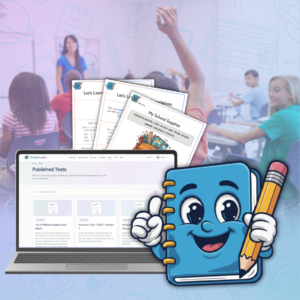
This is where a carefully organised library becomes valuable. When resources are grouped by skill and level, it is easier to find materials that match your lesson aim instead of settling for whatever appears first in a general search. That is one reason many teachers prefer structured platforms such as Print My English over piecing together materials from multiple inconsistent sources.
A beginner PDF should not only suit the language level. It should suit the teaching environment as well.
In primary or lower secondary classrooms, visual prompts and short activity cycles tend to work best. Learners often need movement, quick wins and tasks that can be completed with minimal explanation. In adult classes, the same language point may need a cleaner, less playful presentation and more immediate real-world relevance.
For online teaching, printable PDFs still have value. Teachers can display the task on screen, send it in advance or use it as follow-up homework. The main adjustment is pacing. Online beginners usually need shorter stages and more checking.
In one-to-one tuition, a printable worksheet becomes more flexible. You can slow down, personalise every example and use the page as a shared reference point. In larger groups, you need the worksheet to do more of the classroom management work by keeping instructions obvious and transitions smooth.
If you regularly teach beginners, consistency matters more than novelty. A dependable provider should make it easy to find materials by level, skill and topic. That saves time before the lesson and reduces the risk of choosing something unsuitable.
It also helps when resources are reviewed for classroom use rather than uploaded without any teaching standard behind them. Professional formatting, answer keys and clear categorisation are not extras for busy teachers. They are part of what makes a resource usable.
A large library is useful only if it is organised sensibly. Too much choice without structure creates another kind of workload. Teachers need to locate the right worksheet quickly, print it and teach with confidence.
The best English teaching materials for beginners PDF do a simple job well. They present language clearly, support real classroom conditions and leave room for teachers to teach rather than repair the material. When a resource is level-appropriate, printable and instructionally sound, it does more than fill a lesson slot. It gives beginners a manageable starting point and gives teachers back valuable time.
If you are choosing materials for your next beginner class, look for the resource that makes the lesson easier to run, not just easier to download.
A beginner class can go off track quickly when the material is either too thin to sustain a lesson or too dense for learners to follow. That is why choosing the right English teaching materials for beginners PDF matters so much. Teachers do not just need printable pages. They need resources that are clear, level-appropriate and ready to use without adding another hour of preparation.
For beginner learners, small design choices make a big difference. A worksheet with crowded instructions, unclear visuals or too many new words can slow the whole lesson. On the other hand, a well-structured printable resource gives the class a clear route from recognising language to using it with confidence. If you teach A1 learners, adult starters, young beginners or mixed-attainment groups, the quality of the PDF in front of you often shapes the pace and success of the lesson.
Beginner materials work best when they reduce cognitive load. Learners at this stage are still getting used to classroom English, basic task types and the rhythm of language learning itself. They should not have to decode the layout before they can start the task.
A strong beginner PDF usually introduces one clear target at a time. That might be greetings, numbers, classroom objects, days of the week or simple present forms. The focus stays narrow enough for learners to succeed, but not so narrow that the worksheet becomes repetitive or disconnected from real use.
Visual support is equally important. Pictures, matching tasks, gap fills with prompts and controlled speaking activities all help learners move from recognition to production. At beginner level, clean formatting is not a cosmetic extra. It is part of the teaching.
Answer keys also matter more than many teachers admit. In busy school settings, tutoring sessions or cover lessons, ready-made answers save time and help maintain consistency. They are especially useful when resources are shared across a department or used by less experienced teachers.
Plenty of teaching is now digital, but PDF resources remain practical because they fit the way many lessons are actually delivered. Teachers need materials they can download quickly, print clearly and use in different settings without reformatting.
A printable PDF is reliable. It keeps the layout intact, works well for in-person teaching and can often be shared for homework or remote support. For private tutors, it is easy to print one copy and annotate it live. For schools, it gives staff a consistent version that can be filed, photocopied and reused.
There is a trade-off, of course. A PDF is not interactive in the way a digital platform might be. It will not mark answers automatically or adapt to student performance. But for many teachers, that is not a drawback. It means more control over pacing, presentation and classroom interaction.
The quickest resource is not always the most useful one. A random free worksheet may look convenient, but if it needs rewriting, extra examples or a new task order, it stops being a time-saver.
When reviewing English teaching materials for beginners PDF, start with level fit. Beginners need familiar vocabulary, short instructions and limited grammar load. If a worksheet mixes too many objectives, you will spend lesson time clarifying rather than teaching.
Next, check task progression. The best beginner resources tend to move in a simple sequence. Learners notice language first, then practise it in a controlled way, then use it in a short personalised task. That structure reduces hesitation and supports classroom flow.
It is also worth checking whether the material is genuinely printable. Some PDFs look good on screen but lose clarity when printed in black and white. Others use tiny fonts or complex page designs that are harder for beginners to process. If you teach regularly from printed packs, readability should be a core criterion.
Finally, think about adaptability. A solid beginner worksheet should work for one-to-one lessons, small groups or full classes with only minor changes. Resources with clear task boundaries and reusable formats are often the most dependable.
Not every lesson needs a full workbook-style pack. In many cases, a smaller, focused resource is more effective.
Worksheets remain the core option because they provide guided practice and visible lesson outcomes. They are useful for vocabulary sets, basic grammar, reading for gist, sentence building and simple writing.
Flashcards support fast presentation and repetition. For beginners, they are particularly effective for concrete nouns, daily routines, jobs, food and classroom language. They also help with pair work and quick revision.
Simple games and classroom activities can be just as valuable as formal worksheets. A well-designed speaking card activity or matching exercise often creates more memorable practice than another page of gap fills. The key is control. At beginner level, games work best when they still keep the language target visible.
Tests and review sheets have their place too. They help teachers check retention and give learners a sense of progress. For nervous beginners, short low-pressure assessments are usually more useful than long formal tests.
Many beginner resources fail because they are made to look busy rather than teach clearly. Too much clip art, inconsistent instructions and unrealistic language examples can distract from the actual learning goal.
Another common issue is false beginner labelling. Some materials claim to be for starters but include long reading texts, abstract vocabulary or grammar that belongs at a higher level. This creates frustration for learners and extra adaptation work for teachers.
You may also find resources that isolate language too heavily. Controlled practice is necessary, but if every task is mechanical, learners do not get the chance to connect the language to their own lives. A beginner worksheet should still feel communicative, even in a modest way.
This is where a carefully organised library becomes valuable. When resources are grouped by skill and level, it is easier to find materials that match your lesson aim instead of settling for whatever appears first in a general search. That is one reason many teachers prefer structured platforms such as Print My English over piecing together materials from multiple inconsistent sources.
A beginner PDF should not only suit the language level. It should suit the teaching environment as well.
In primary or lower secondary classrooms, visual prompts and short activity cycles tend to work best. Learners often need movement, quick wins and tasks that can be completed with minimal explanation. In adult classes, the same language point may need a cleaner, less playful presentation and more immediate real-world relevance.
For online teaching, printable PDFs still have value. Teachers can display the task on screen, send it in advance or use it as follow-up homework. The main adjustment is pacing. Online beginners usually need shorter stages and more checking.
In one-to-one tuition, a printable worksheet becomes more flexible. You can slow down, personalise every example and use the page as a shared reference point. In larger groups, you need the worksheet to do more of the classroom management work by keeping instructions obvious and transitions smooth.
If you regularly teach beginners, consistency matters more than novelty. A dependable provider should make it easy to find materials by level, skill and topic. That saves time before the lesson and reduces the risk of choosing something unsuitable.
It also helps when resources are reviewed for classroom use rather than uploaded without any teaching standard behind them. Professional formatting, answer keys and clear categorisation are not extras for busy teachers. They are part of what makes a resource usable.
A large library is useful only if it is organised sensibly. Too much choice without structure creates another kind of workload. Teachers need to locate the right worksheet quickly, print it and teach with confidence.
The best English teaching materials for beginners PDF do a simple job well. They present language clearly, support real classroom conditions and leave room for teachers to teach rather than repair the material. When a resource is level-appropriate, printable and instructionally sound, it does more than fill a lesson slot. It gives beginners a manageable starting point and gives teachers back valuable time.
If you are choosing materials for your next beginner class, look for the resource that makes the lesson easier to run, not just easier to download.
Find what worksheets help speaking fluency, from...
Learn moreReduce teacher workload with practical planning systems,...
Learn moreTests versus quizzes serve different classroom purposes....
Learn moreThis guide to printable spelling activities helps...
Learn more