Five minutes before class is a poor time to discover your worksheet is too easy, badly laid out, or missing an answer key. A good guide to printable ESL worksheets starts with that reality. Teachers do not need more files to sift through. They need materials that are clear, level-appropriate, quick to print, and ready to use in real lessons.
Printable worksheets still earn their place in ESL teaching because they solve practical classroom problems. They give structure to mixed-ability groups, support quieter learners who need thinking time, and provide a visible record of progress. They also help when technology fails, when learners share devices, or when you want students focused on language rather than screens.
That said, not every printable worksheet saves time. Some create more work than they remove. If the language is unnatural, the task design is weak, or the level is unclear, you end up rewriting, supplementing, and explaining around the page. The value of a worksheet is not that it exists in PDF form. The value is that it helps you teach better with less preparation.
What makes a printable ESL worksheet worth using
The best printable worksheets are built for teaching, not just for filling paper. They have a clear objective, whether that is practising the present perfect, building topic vocabulary, improving reading accuracy, or checking understanding after a listening task. Students should be able to see what they are doing, and teachers should be able to use the sheet without redesigning the lesson on the spot.
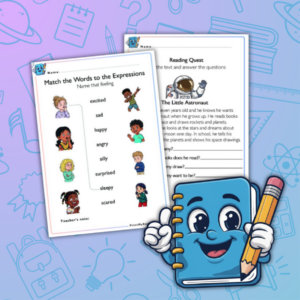
Layout matters more than many people expect. A crowded page can slow learners down, especially at lower levels. Clear spacing, readable fonts, consistent instructions, and sensible task order all reduce unnecessary confusion. For younger learners and lower-level adults, visual support can make the difference between a smooth start and five minutes spent clarifying the task.
Answer keys are another non-negotiable feature for many teachers. They save time, but they also support consistency. This is especially useful in busy departments, for supply teachers, or for tutors teaching multiple levels across the same week.
A guide to printable ESL worksheets by lesson goal
The fastest way to choose a worksheet is to start with your lesson goal, not the design style. If the aim is presentation, you need controlled practice with clear examples. If the aim is fluency, a worksheet should prompt speaking, problem-solving, or guided writing rather than trap students in isolated sentence work.
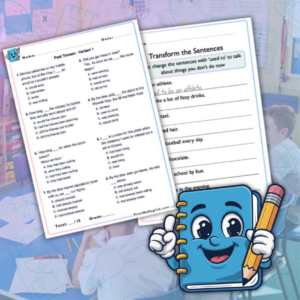
For grammar lessons, printable worksheets work best when they move from recognition to production. A gap-fill alone is rarely enough. More useful grammar sheets include a short rule reminder, a focused practice stage, and then a task where learners produce the target form in context. That progression helps you see whether students can actually use the language rather than simply spot the right answer.
For vocabulary, context is essential. Matching words to definitions has its place, but stronger worksheets push further with categorisation, collocations, sentence creation, or topic-based reading. A worksheet on food, travel, or work should help students notice how words behave, not just what they mean.
Reading worksheets need balance. If every task checks tiny details, learners may miss the main idea. If every task is broad, weaker readers can drift. A good reading sheet usually combines gist, scanning, and language-focused questions. That structure supports comprehension without turning the text into a test at every line.
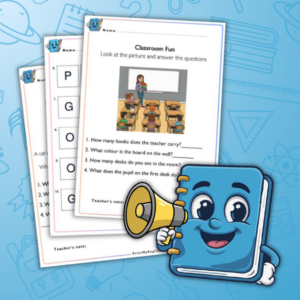
Speaking worksheets are often underestimated because they look simple. In practice, they can be among the most useful printable resources in the room. Role cards, discussion prompts, information gaps, and picture-based tasks all give learners a reason to speak. The key is having enough support for hesitant students without scripting every sentence.
How to match worksheets to CEFR level
One of the biggest reasons worksheets fail is level mismatch. A page marked “beginner” can still include long instructions, abstract questions, or vocabulary far beyond A1. That creates frustration for learners and extra work for the teacher.
At A1 and A2, printable worksheets should use short instructions, familiar topics, and highly controlled tasks. Learners at these levels benefit from strong visual cues, sentence frames, and repetition. There is nothing wrong with simplicity if it allows students to succeed and build confidence.
At B1 and B2, learners can usually handle more open-ended tasks, longer readings, and less guided writing. This is often the point where worksheets become most flexible. The same sheet can support pair work, homework, revision, or extension work, depending on how you stage it.
At C1 and C2, challenge should come from thinking and language use, not from poor clarity. Advanced learners still need well-designed tasks. A dense page full of text does not automatically equal rigour. Strong higher-level worksheets focus on nuance, tone, inference, precision, and extended production.
If resources are organised by CEFR, selection becomes much quicker. That matters when you are planning several groups at once or trying to maintain consistency across a scheme of work.
When printable worksheets save time, and when they do not
Printable materials are most effective when they reduce decision-making. If a worksheet arrives with a clear topic, accurate language, answer keys, and a sensible level marker, it can cut a large part of lesson prep. You can spend your energy on staging, monitoring, and adapting to your learners rather than building materials from scratch.
They save less time when you use them without checking fit. A beautifully designed worksheet that does not match your class objective still costs you time. So does a worksheet that needs heavy editing for layout, language, or level. Ready-to-print should mean you can use it with minimal changes, not that you can begin rewriting it a bit faster.
There is also a classroom management benefit. Printed tasks create a shared focal point. In larger groups, that can improve pacing and reduce downtime. In one-to-one lessons, they give shape to the session and provide something concrete for revision afterwards.
Choosing a reliable worksheet library
If you use printable resources regularly, the quality of the library matters as much as the quality of the individual sheet. A well-organised collection should let you filter by skill, topic, and level without wasting time. When categories are clear, planning becomes more efficient, especially for teachers handling mixed timetables or covering unfamiliar classes.
Consistency is another sign of a dependable resource bank. If one worksheet is polished and the next is vague or poorly proofread, you lose confidence quickly. Teachers need resources they can trust across grammar, vocabulary, reading, writing, tests, and classroom activities.
This is where a platform such as Print My English fits naturally for many teachers. Professionally designed, printable resources with answer keys and CEFR-based organisation do not just look tidy. They support faster planning and more confident delivery.
Practical checks before you print
Before using any worksheet, ask four quick questions. Is the objective clear? Is the level realistic for this class? Can students understand the instructions without a long explanation? And will this task help me teach the lesson I actually want to teach?
If the answer is yes to all four, the worksheet is likely doing its job. If not, it may still be usable, but you should know where the friction will appear. Sometimes a strong worksheet needs only a shorter lead-in or a paired speaking follow-up. Sometimes it is simply the wrong resource for that group on that day.
Printable ESL worksheets work best when they are chosen with the same care as any other teaching tool. The right sheet can save time, support better learning, and make a lesson run more smoothly from the first minute. For busy teachers, that is not a small advantage. It is often the difference between managing the lesson and teaching it well.
The aim is not to collect more worksheets. It is to keep the right ones close at hand, so when the next class is approaching, you can print, walk in, and get on with teaching.