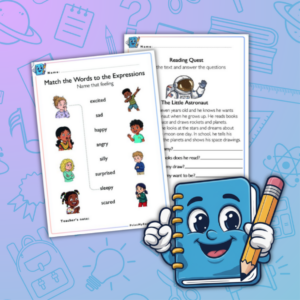
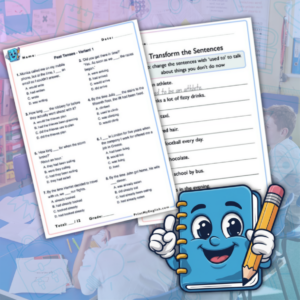
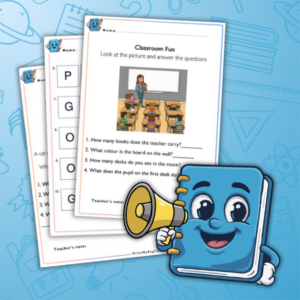
A worksheet can either save a lesson or create more work. When learners finish too quickly, cannot understand the instructions, or need an answer key that is nowhere to be found, even a well-designed activity becomes a planning problem. This guide to classroom printable resources will help you choose materials that are ready for real ESL lessons, not just attractive pages to print.
What effective classroom printable resources should do
A useful printable has a clear classroom job. It may introduce vocabulary, give learners controlled grammar practice, build reading confidence, prompt pair speaking, check understanding, or provide a calm extension task for early finishers. The best resources do one of these jobs well rather than trying to cover an entire unit on one crowded page.
Before downloading or printing anything, start with the learning outcome. If your A2 class needs to ask for directions politely, a matching activity may help with vocabulary, but it will not provide enough speaking practice on its own. Pair it with role cards or a short information-gap task so learners have a reason to use the language aloud.
Quality also shows in the details. Clear instructions, readable fonts, enough writing space, sensible examples, and accurate language all reduce interruptions once the lesson begins. For teachers, an included answer key matters just as much. It speeds up marking, supports cover lessons, and lets you teach with confidence when time is tight.
Plan by lesson purpose, not by worksheet type
It is easy to search for a crossword, flashcards, or a grammar worksheet because those formats are familiar. A more efficient approach is to decide what students need to do first, then select the printable format that supports it.
For presentation, picture flashcards, labelled visuals, and short matching tasks give learners understandable input without a long explanation. For practice, gap fills, sentence-building strips, sorting activities, and guided dialogues let them work with one language point at a time. For production, discussion cards, role plays, surveys, and writing prompts move the focus from recognising language to using it.
This distinction prevents a common problem: printing several enjoyable activities that all practise the same limited skill. A vocabulary word search can be useful as consolidation, for example, but it should not be the only evidence that learners can understand and use new words. Build a short sequence instead: introduce the language, practise it with support, then ask learners to communicate something meaningful.
For one-to-one lessons, choose resources that create conversation rather than silent completion. In larger classes, prioritise formats that are easy to distribute, explain, and check. The right choice depends on your setting, but every activity should earn its place in the lesson.
Use CEFR levels to choose the right challenge
Level is one of the fastest ways to narrow a large resource library. CEFR organisation from A1 to C2 is especially helpful because it gives teachers a practical starting point for matching language demands to learner ability.
At A1, learners benefit from familiar topics, strong visual support, short instructions, and predictable sentence patterns. A simple food flashcard set followed by a guided ‘I like’ and ‘I do not like’ activity is more productive than an open-ended writing task. At A2 and B1, students can handle broader everyday themes, short texts, comparisons, and more varied question forms, provided the task has a clear model.
From B2 upwards, printables can make room for nuance. Use opinion prompts, error-correction tasks, collocation work, reading texts with inference questions, and structured debate materials. Advanced students do not necessarily need more text on the page. They need tasks that demand more precise choices, stronger justification, and greater control of register.
A CEFR label is a guide, not a guarantee. A confident A2 adult may have excellent speaking skills but need more support with reading. A mixed-level group may need the same topic presented in two versions. Check the vocabulary load, text length, and amount of independent production required before you print.
Check a resource before committing to it
Five minutes of review can prevent twenty minutes of classroom repair. Read every instruction as though you are a learner seeing the task for the first time. Is the task objective obvious? Are examples supplied where needed? Can students complete it with the language they have already met, or does it rely on unexplained vocabulary?
Then consider the practical details. A resource should print clearly in black and white if colour printing is unavailable. Images should support meaning rather than decorate empty space. If students need to cut out cards, allow time for this or prepare them in advance. For activities that involve movement, decide how you will manage noise, pairs, and finished work before the lesson starts.
Answer keys deserve a final check too. They should be complete, accurate, and easy to consult. For open-ended speaking and writing tasks, a model answer or useful language bank is often more valuable than a single ‘correct’ response.
Adapt the task, not the whole resource
Ready-to-print does not mean fixed. A dependable printable should save the main preparation time while still allowing small adjustments for your learners.
If a worksheet is slightly too easy, ask students to explain their choices, add one original sentence, or compare answers in pairs before whole-class feedback. If it is too difficult, pre-teach a small set of essential words, complete the first item together, or reduce the number of questions without changing the learning aim.
The same page can often work across several formats. Turn a vocabulary worksheet into a team race by displaying the prompts and giving groups mini whiteboards. Use question cards as a speaking carousel. Cut sentence halves into a matching activity. These adaptations are most effective when they retain the original language focus rather than adding complexity simply to make an activity feel new.
For mixed-ability classes, give all learners the same central task with different levels of support. Some may use a word bank or sentence starter, while others work without it and add a follow-up question. This approach keeps the class working towards a shared objective without creating separate lessons for every learner.
Create a system you will actually use
A growing collection is only helpful if you can find the right item quickly. Save resources by skill, topic, grammar focus, CEFR level, and lesson purpose. A file name such as ‘B1 Travel – past simple speaking cards’ is far more useful on a busy morning than ‘worksheet final 3’.
Keep a simple record of what happened when you used a resource. One sentence is enough: ‘Good pair discussion, but allow ten extra minutes’ or ‘A2 group needed the vocabulary box.’ Over time, this becomes a personal teaching bank based on evidence rather than memory.
It also helps to keep a small emergency folder. Include no-prep speaking cards, short reading tasks, vocabulary revision games, and extension worksheets with answer keys. These materials are invaluable when technology fails, attendance changes, or a planned activity ends early.
Print My English supports this approach with professionally designed materials organised by skill area and CEFR level, helping teachers locate classroom-ready worksheets, activities, tests, and flashcards without starting from a blank page.
Know when paper is not the best option
Printables are practical, but they are not the answer to every teaching need. A pronunciation lesson may require more teacher modelling and listening than paper-based work. A complex writing lesson may need live feedback on structure. Online learners may benefit from a shared digital document rather than a page held up to the camera.
Use printables where they create focus, structure, repetition, and interaction. Step away from them when the lesson needs spontaneous discussion, demonstration, or detailed individual feedback. The aim is not to fill every minute with handouts. It is to give learners the right support at the right point.
A reliable weekly routine is simple: identify the language goal, select level-appropriate materials, check instructions and answers, plan one adaptation, and file the resource with a quick teaching note afterwards. That small process protects your preparation time while making each printed page work harder for your learners.
The most valuable resource is not the one with the most activities. It is the one you can print, teach, and trust when your attention needs to stay with the class.