
Best ESL Materials for Adults That Save Time

Adult classes usually make one problem obvious within the first ten minutes: learners will not tolerate filler. If a worksheet feels childish, vague, or poorly pitched, you lose momentum fast. That is why choosing the right ESL materials for adults matters so much. Good resources do more than fill lesson time – they help you teach clearly, adapt quickly, and keep learners engaged without adding hours to your preparation.
For adult learners, relevance is not a bonus. It is the baseline. They want English they can use at work, in daily life, in study, and in real conversations. Teachers need materials that reflect that reality while still being easy to print, easy to explain, and easy to adapt across different class sizes and teaching contexts.
What adult learners actually need from ESL materials
Adult students bring different strengths and pressures into the classroom. Some are confident speakers with weak writing. Others have strong grammar knowledge but little fluency. Many are balancing study with work, family life, or relocation. As a result, ESL materials for adults need to feel purposeful from the start.
That usually means content built around realistic language use rather than school-style exercises alone. A grammar worksheet can still be useful, but it works best when it leads into something practical such as discussing routines, solving a workplace problem, or responding to an email. Adults tend to respond well when they can see the point of the task immediately.
Tone matters too. Materials designed for children can sometimes be repurposed, but often the visuals, examples, and activity style create resistance. Adults generally prefer cleaner design, age-appropriate topics, and tasks that respect their experience. A beginner adult learner may need simple language, but not simplistic content.
The best ESL materials for adults are practical first
Teachers often get stuck between two extremes. One set of resources looks polished but offers little teaching value. Another is academically sound but takes too long to prepare or explain. The best ESL materials for adults sit in the middle. They are instructionally clear, professionally designed, and ready to use in an actual lesson.
A useful resource should answer a few questions quickly. What level is it for? What skill does it target? How long will it take? Does it include an answer key? Can it work in a one-to-one lesson as well as a group class? If those details are missing, even a good-looking worksheet creates extra work.
This is where structure makes a real difference. CEFR-based organisation helps teachers choose materials with far more confidence, especially when classes are mixed in ability or when you are planning a sequence rather than a single lesson. If a speaking worksheet marked B1 suddenly includes dense B2 reading input and abstract discussion prompts, the lesson becomes harder to manage. Clear levelling protects both lesson flow and learner confidence.
Which types of materials work best in adult ESL lessons?
There is no single best format because adult classes vary so much. What works in an evening conversation group may not suit an exam-focused private lesson. Still, some resource types consistently prove their value.
Printable worksheets remain the backbone of many adult lessons because they are flexible. A well-designed worksheet can introduce language, check understanding, and lead naturally into pair work or freer speaking. The key is whether it moves beyond mechanical completion. Adults usually benefit most when controlled practice is followed by a communicative task.
Flashcards can also work well with adults, although teachers sometimes avoid them because they seem too basic. In reality, they are useful for fast vocabulary presentation, revision, and speaking prompts, especially at lower levels. The difference lies in design and delivery. Clean, relevant visuals and adult topics make them far more effective.
Crosswords, matching tasks, and other puzzle-style activities have a place too, but only when they support a clear learning goal. They can be excellent for review, early finishers, or low-pressure consolidation. They are less useful when used as a substitute for genuine language practice.
Tests and progress checks are often overlooked as teaching tools. For adults, short assessments can increase motivation because they show progress clearly. They also help teachers spot where a class needs recycling or where an individual learner is ready to move on.
How to choose materials by skill, not just by topic
Many teachers begin with a topic such as travel, work, or food. That makes sense, but skill focus is often the more useful starting point. A strong set of ESL materials for adults should help you target what learners actually need to improve.
For speaking, look for tasks with clear staging. Adults speak more confidently when they have support before open discussion. Useful materials often include vocabulary preparation, model language, and prompts that reduce blank-page silence. Speaking resources that move from controlled to freer practice usually produce better results than discussion questions alone.
For grammar, clarity matters more than quantity. Adults do not always need longer explanations. They need accurate examples, manageable practice, and opportunities to use the structure meaningfully. A concise worksheet with a strong follow-up task often outperforms a dense grammar pack.
For reading, text choice matters. Adults engage more readily with content that feels plausible and relevant, whether that is a short article, a workplace notice, or a practical dialogue. Good reading materials also respect time. If the text is too long for the lesson aim, it becomes a burden rather than a tool.
For vocabulary, range and recycling are both important. Topic-based vocabulary sheets are useful, but only if they lead into use. Without review or application, new lexis disappears quickly. Materials that build in repetition across exercises usually save teachers from having to create separate revision tasks later.
What to avoid when selecting adult ESL resources
The fastest way to waste prep time is to download something that looks useful but creates problems in class. A few warning signs tend to appear again and again.
Poor levelling is one of the biggest. If the language demand is unclear, you may spend half the lesson re-teaching what the material should have supported. Over-designed pages can be another issue. Too many fonts, crowded layouts, or unclear instructions distract learners and slow down delivery.
It is also worth being cautious with overly generic conversation materials. Questions such as “What is your favourite season?” may work as fillers, but they rarely sustain an adult lesson on their own. Stronger materials give learners something to work with first, whether that is useful language, a scenario, or a short input text.
Finally, avoid resources that create marking and checking problems. Answer keys are not glamorous, but they matter. They speed up planning, support cover lessons, and make it easier to use the same material across multiple groups.
Why printable resources still matter
Digital teaching tools are useful, but printable materials remain essential for many adult teaching contexts. In classrooms, they reduce technical friction. In tutoring, they provide structure and leave learners with something tangible to review. In online lessons, printable PDFs can still anchor the session and give students a clear study record.
Print-first resources are especially valuable when they are designed for immediate classroom use. Teachers do not want to spend twenty minutes resizing, rewriting instructions, or fixing formatting. Ready-to-print materials save time only when they are genuinely ready.
That practical standard is what many teachers now expect. A dependable library should make it easy to browse by level, skill, and resource type so you can find what you need quickly. For busy teachers, that kind of organisation is not a luxury. It is part of effective lesson planning. That is one reason platforms such as Print My English are useful to keep on hand when your timetable is full and your prep window is short.
Building a better adult lesson with fewer materials
More resources do not always mean better teaching. In fact, adult lessons often improve when the material load is lighter and the task sequence is clearer. One strong worksheet, one speaking task, and one review activity can be enough for a focused, productive session.
This matters because adult learners usually value depth over novelty. They would rather use a useful language point properly than rush through five disconnected tasks. The best materials support that approach. They help you teach with direction, not just activity.
If a resource saves time, matches level, and leads to real language use, it is doing its job. That is the standard worth keeping. When your materials are clear, adult-appropriate, and ready to print, lesson planning becomes faster and teaching becomes steadier – which leaves more room for the part that matters most: responding to the learners in front of you.
The right resource will not teach the lesson for you, but it will remove unnecessary friction. For adult classes, that is often the difference between getting through a plan and teaching with confidence.
- July 8, 2026
- 9:07 am
Share this article
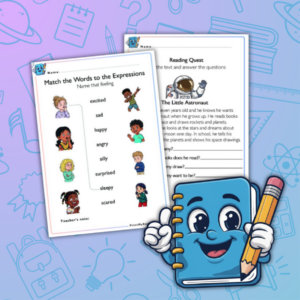
What Worksheets Help Speaking Fluency Best?
Find what worksheets help speaking fluency, from...
Learn more
7 Ways to Reduce Teacher Workload and Prep Time
Reduce teacher workload with practical planning systems,...
Learn more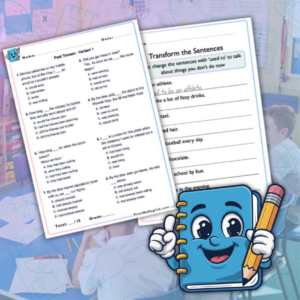
Tests Versus Quizzes: What Teachers Should Use
Tests versus quizzes serve different classroom purposes....
Learn more
Teacher’s Guide to Printable Spelling Activities
This guide to printable spelling activities helps...
Learn more