A lesson can look effortless to learners while taking hours to prepare. That gap is where teacher workload grows: selecting materials, adapting tasks, checking levels, printing copies, preparing answers and finding a workable plan for the next class. For English teachers managing several groups, private learners or online sessions, those small jobs quickly become a second shift.
Reducing preparation time is not about lowering standards or relying on the same worksheet every week. It is about building a practical system that protects teaching time, keeps lessons purposeful and gives you enough capacity to respond to what learners actually need.
Why teacher workload grows so quickly
English teaching often involves more variables than a timetable suggests. One class may need vocabulary support, another exam practice, and a third confidence-building speaking work. Even when the topic is familiar, the activities must suit learners’ ages, goals, language levels and lesson length.
The hidden workload is often the most draining. A teacher may spend 20 minutes searching for a reading text, another 15 adapting its language, then more time producing instructions, answer keys and extension tasks. Multiply that across five or six lessons and planning becomes fragmented, repetitive and difficult to switch off from.
There is also a quality problem. Free materials can be useful, but they are not always level-appropriate, accurate or ready to print. When a resource needs substantial rewriting before it reaches the classroom, it has not really saved time.
1. Plan around repeatable lesson structures
A reliable lesson structure reduces decision fatigue. You do not need every lesson to follow an identical format, but having a few dependable frameworks makes planning faster and clearer.
For example, a vocabulary lesson might move from retrieval, to presentation, to controlled practice, then a short speaking task. A reading lesson might use prediction, gist, detail and a personalised follow-up. Once the structure is familiar, you only need to choose the language focus and suitable materials rather than designing the whole lesson from a blank page.
Keep two or three structures for each common lesson type. This gives learners useful consistency while allowing enough variation to maintain interest.
2. Choose resources by level before topic
A colourful activity is not automatically a useful activity. When the language demand is wrong, teachers spend extra time simplifying instructions, replacing vocabulary or creating support materials.
Start with level. For CEFR-aligned teaching, identify whether you need A1, A2, B1, B2, C1 or C2 material, then narrow the search by skill or topic. This protects the lesson objective and reduces the amount of adaptation required.
It also makes differentiation more manageable. If a mixed-level group needs the same topic, select a core activity at the group’s working level and prepare one simpler or more challenging version. You are then adjusting a proven resource rather than building separate lessons from scratch.
Use a simple adaptation rule
Before changing a worksheet, ask whether the adjustment will take less time than finding a better-fit resource. Changing a few example sentences or adding a speaking prompt may be worthwhile. Rewriting the text, replacing most questions and producing a new answer key usually is not.
That distinction matters. Adaptation is valuable when it serves a clear learner need, not when it becomes an automatic response to poorly matched materials.
3. Build a small bank of reusable activities
The most useful resource library is not necessarily the largest. It is the one you can locate and use quickly. Save the activities that work well with clear file names, such as “B1 travel role-play”, “A2 present simple review” or “C1 discussion phrases”. Include the level, skill and lesson type in the name.
Over time, create a bank for regular needs: warmers, vocabulary review, grammar practice, pair work, speaking extensions, fast finishers and homework. A strong activity can be reused with a new language focus, a different class or a new set of prompts.
Reusable does not mean stale. A short information-gap task can feel fresh when the topic changes from food to jobs, travel or technology. The teaching technique remains familiar, while the language and context stay relevant.
4. Protect planning time with a realistic weekly routine
Teacher workload becomes heavier when planning happens in scattered gaps between lessons, messages and marking. If possible, assign a specific purpose to each planning block rather than trying to complete everything at once.
One short block can be for selecting materials for the week. Another can focus on printing, saving files or preparing online slides. A later session can be used for adapting one activity for a particular learner or group. This creates momentum and prevents administrative tasks from taking over the time needed for teaching decisions.
A practical rule is to prepare the essential lesson first: aim, main activity, instructions, answer key and a short extension. Add optional extras only when the core lesson is ready. A well-run 50-minute lesson does not require five backup activities and a fully redesigned worksheet.
5. Use answer keys and self-checking routines
Marking and checking can quietly consume the hours you save in planning. Where appropriate, provide answer keys so learners can check controlled practice independently or in pairs. This is especially effective for grammar, vocabulary, crosswords, matching tasks and reading comprehension.
Self-checking does not remove the teacher’s role. It frees you to listen to explanations, identify patterns of error and support learners who need it. Instead of reading out every answer, you can ask why an answer is correct and deal with the language point that caused difficulty.
For speaking and writing tasks, use a short success checklist. Learners might check whether they used target vocabulary, included a past tense form or asked a follow-up question. Clear criteria reduce repeated instructions and help learners take greater responsibility for improvement.
6. Prepare for the class, not for every possibility
Over-preparation often comes from a good instinct: teachers want to be ready for early finishers, low-energy groups and unexpected technical problems. The answer is not to prepare an entirely separate lesson for every scenario.
Instead, keep a small set of flexible extensions. A vocabulary worksheet can become a pair quiz. A reading text can lead to discussion questions. Flashcards can support a quick retrieval game, a categorising activity or a speaking challenge. Choose materials with more than one classroom use, and your contingency planning becomes lighter.
For online teaching, have one printable or screen-shareable task available as a fallback. For face-to-face classes, keep a few no-prep speaking prompts or revision games ready. The aim is not perfect control. It is enough flexibility to keep learning moving when the plan changes.
7. Set a clear standard for what “ready” means
Many teachers continue planning because a lesson could always be improved. A better image might exist. A warmer could be more original. The instructions could be shorter. Those refinements have value, but they can also expand to fill every available hour.
Define a professional ready-to-teach standard. The objective is clear, materials match the learner level, instructions are understandable, answers are available where needed, and there is a sensible next step if learners finish early. When those elements are in place, the lesson is ready.
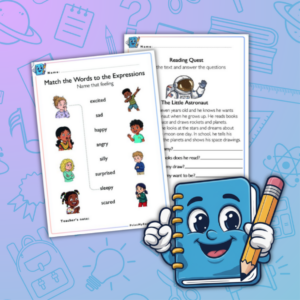
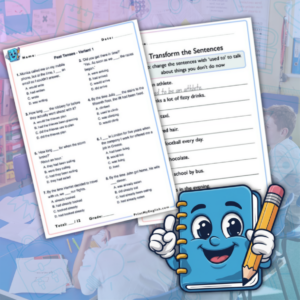
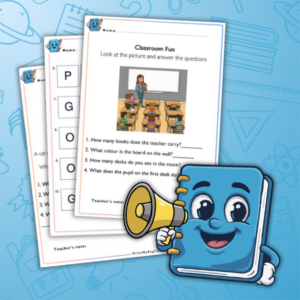
Premium printable materials can help maintain that standard without adding more work. At Print My English, levelled worksheets, classroom activities and answer keys are designed to be selected, printed and used directly, giving teachers a dependable starting point rather than another document to rebuild.
A lighter workload still needs professional judgement
Not every lesson should be standardised. A new class, an individual learner with a specific goal or a group preparing for an exam may need careful tailoring. The trade-off is worth it when adaptation directly improves learning.
But routine preparation should not consume the energy needed for feedback, classroom relationships and responsive teaching. Save your detailed custom work for the moments that genuinely require it. For the rest, use clear routines, well-organised levelled resources and activities you trust. The result is not less thoughtful teaching – it is more time to teach with confidence.